Plast Center Danmark contributes to European Commission-featured project on circular solutions for marine litter
The Circular Ocean-bound Plastic project has been featured by the European Commission as an example of how cross-border cooperation can help address marine litter and create new circular opportunities.
Plastic pollution remains one of the major environmental challenges for Europe’s seas and coastal regions. In the Baltic Sea, a significant share of marine plastic pollution originates from land-based sources and reaches the sea through rivers, canals, harbours and urban waterways. The Circular Ocean-bound Plastic project works to address this challenge through international cooperation, collection activities, material analysis and innovation.
Together with project partners from Denmark, Sweden, Germany and Poland, the project has collected and analysed more than 37,000 pieces of riverine litter from pilot activities in Aarhus, Rostock and Gdańsk. According to the European Commission article, this work has helped generate one of the most comprehensive datasets on ocean-bound plastic and riverine waste streams in the South Baltic region.
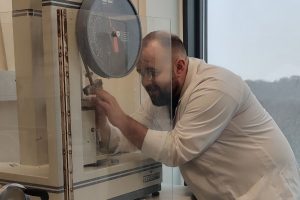
As a Danish project partner, Plast Center Danmark has contributed with material analysis and laboratory testing to investigate the properties and recycling potential of plastics collected from rivers and waterways. This work has included both mechanical testing and chemical recycling trials through pyrolysis, helping to assess whether riverine plastic can be collected, processed and potentially used as a resource in future circular solutions.
The project demonstrates how cooperation across borders and sectors can support cleaner seas, stronger regional innovation and more sustainable plastic solutions. By combining collection, research, testing, stakeholder engagement and business development, Circular Ocean-bound Plastic contributes valuable knowledge that can be used across the South Baltic region. The project has also resulted in reports and scientific publications that support further work with marine litter prevention and circular economy solutions.
Plast Center Danmark is proud to be part of this collaboration and to contribute technical knowledge on plastic materials, recycling potential and circular solutions.
The Circular Ocean-bound Plastic project is co-financed by the Interreg South Baltic Programme 2021–2027 with funds from the European Regional Development Fund.
Read the European Commission article here:
https://ec.europa.eu/regional_policy/whats-new/newsroom/18-06-2026-baltic-sea-cooperation-turns-marine-litter-into-circular-opportunities_en