🎄🔬 From River Plastic to Holiday Testing: What Happens Next?
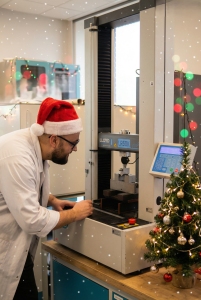
As we wrap up the year at Plast Center Danmark, the work doesn’t slow down — even if the lab gets a little more festive 🎅✨
Following our long-term monitoring and collection of plastic from the Aarhus River using the SeaProtectorOne device, we’ve now taken the next step: mechanical testing of the recovered material.
Plast Center Danmark prepared 10 kg of polypropylene gathered from the river — cutting it into small pieces, washing it thoroughly, and getting it ready for grinding. A partner company then moulded and extruded the material into standardised “dogbone” specimens (not for chewing 🐶😉 but perfect for mechanical testing 🧪).
We are now testing:
- 100% river-collected polypropylene
- 50/50 blends of river and virgin plastic
- 100% virgin polypropylene
🎯 What we want to understand
How much does a journey through the river environment affect the mechanical strength and reuse potential of polypropylene?
These tests will help evaluate whether plastic collected directly from waterways can be reintegrated into circular material streams.
It’s exciting to see river plastic move from data collection → material preparation → real mechanical performance testing. More insights coming soon as the results unfold!
Happy holidays from the lab! 🎄🔧
#DanskMaterialeNetværk #PlasticRecycling #MechanicalTesting #MaterialsScience #Polypropylene #CircularEconomy #OceanBoundPlastic #RiverPlastic #PlasticPollution #Innovation #SustainableMaterials #CircularOceanBoundPlastic #COPforCleanSeas #Aarhus #BalticSea #MarineLitter #EnvironmentalScience #Collaboration #HolidayScience #SeaProtectorOne